Blog · · 5 min read
The Product Illusion is killing startups. Here's how to avoid it.
What is the Product Illusion, why AI makes it easier to fall for, and the simple framework to escape it.

A few years ago I worked as a startup coach in Manchester. Again and again, I met early-stage teams who had spent months and tens of thousands of pounds getting their first product built. By the time we spoke, they'd already found out it was heading in the wrong direction, and the money was gone.
It was frustrating. The questions that would have saved them were cheap to ask, but the allure of a real, clickable product won every time. Finding someone who would pay can feel much scarier than making the product a bit better.
I call this the Product Illusion, the belief that building the product is the most meaningful progress a founder can make. I've fallen for it myself, more than once.
Today, AI makes the illusion cheaper, faster and more convincing. Building with AI is almost addictive. Every prompt produces something you can see, and there's always one more feature to ask for. It's easy to mistake a growing product for a growing business. It feels like progress, but nothing is being learned.
Start with a business hypothesis
Every business sits across two worlds. Your customer's world is where the problem lives, and it's outside your control. Your world is what you control and build. Your offer, the promise and its price, is where the two meet.
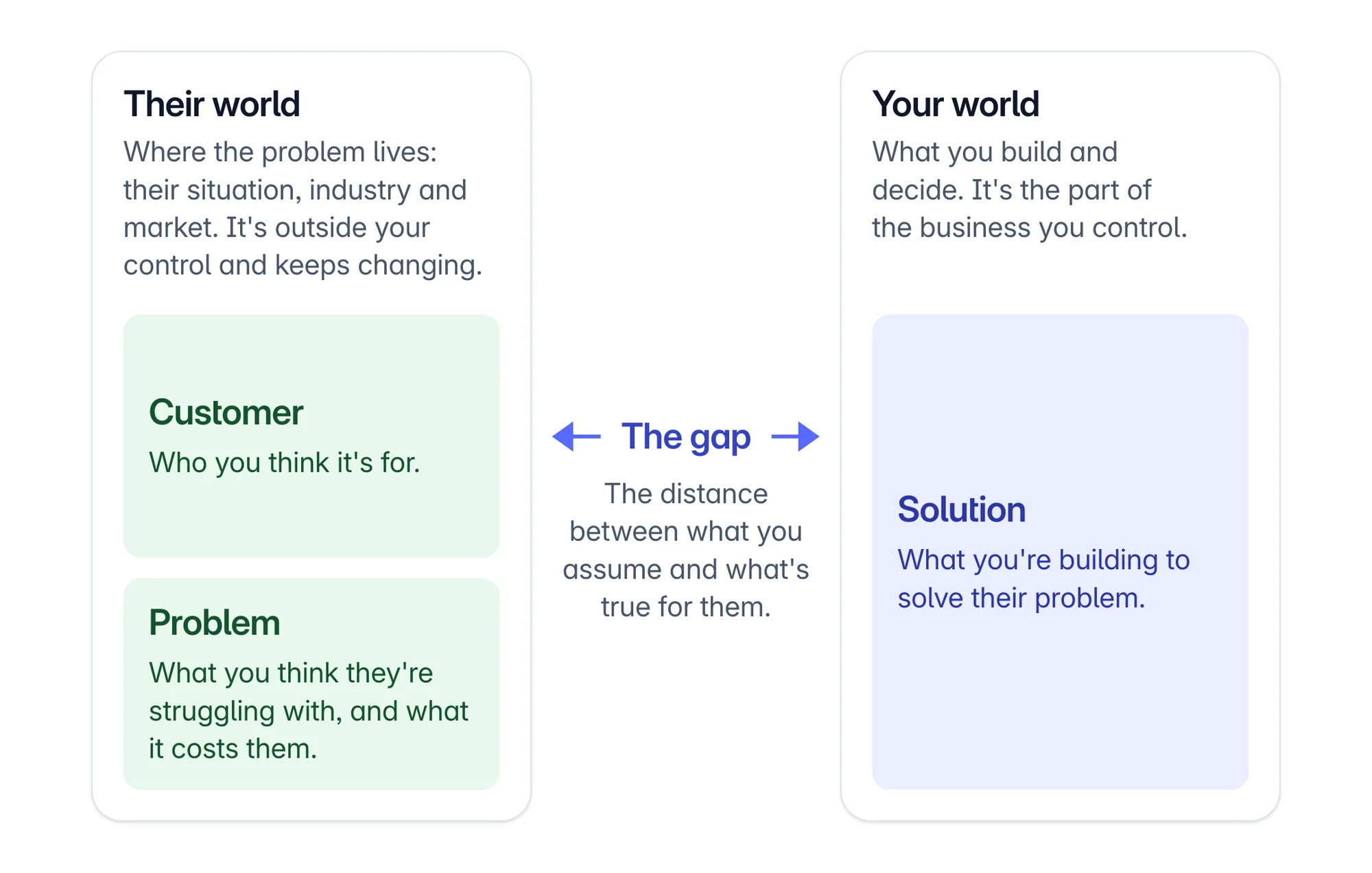
You know your own world well. What you know about theirs starts as assumptions, and the distance between those assumptions and what's true for your customers is the gap.
Building happens in your world, so on its own it can't narrow the gap. That's what makes the Product Illusion a trap.
The way out is to treat your idea as a hypothesis that spans both worlds. Write down what you believe about it, then use AI's speed to test those beliefs with real customers, and let what they do change your answers.
Five questions make up your Business Hypothesis:
- Customer: Who is this for, who needs it first, and how will you find them?
- Problem: What are they struggling with, what do they do about it now, and what does it cost them?
- Promise: What outcome are you promising, and why would they choose it?
- Solution: What must the first version do to keep that promise?
- Commercial: What will you charge, how will you package it, and will that cover what each customer costs you to serve?
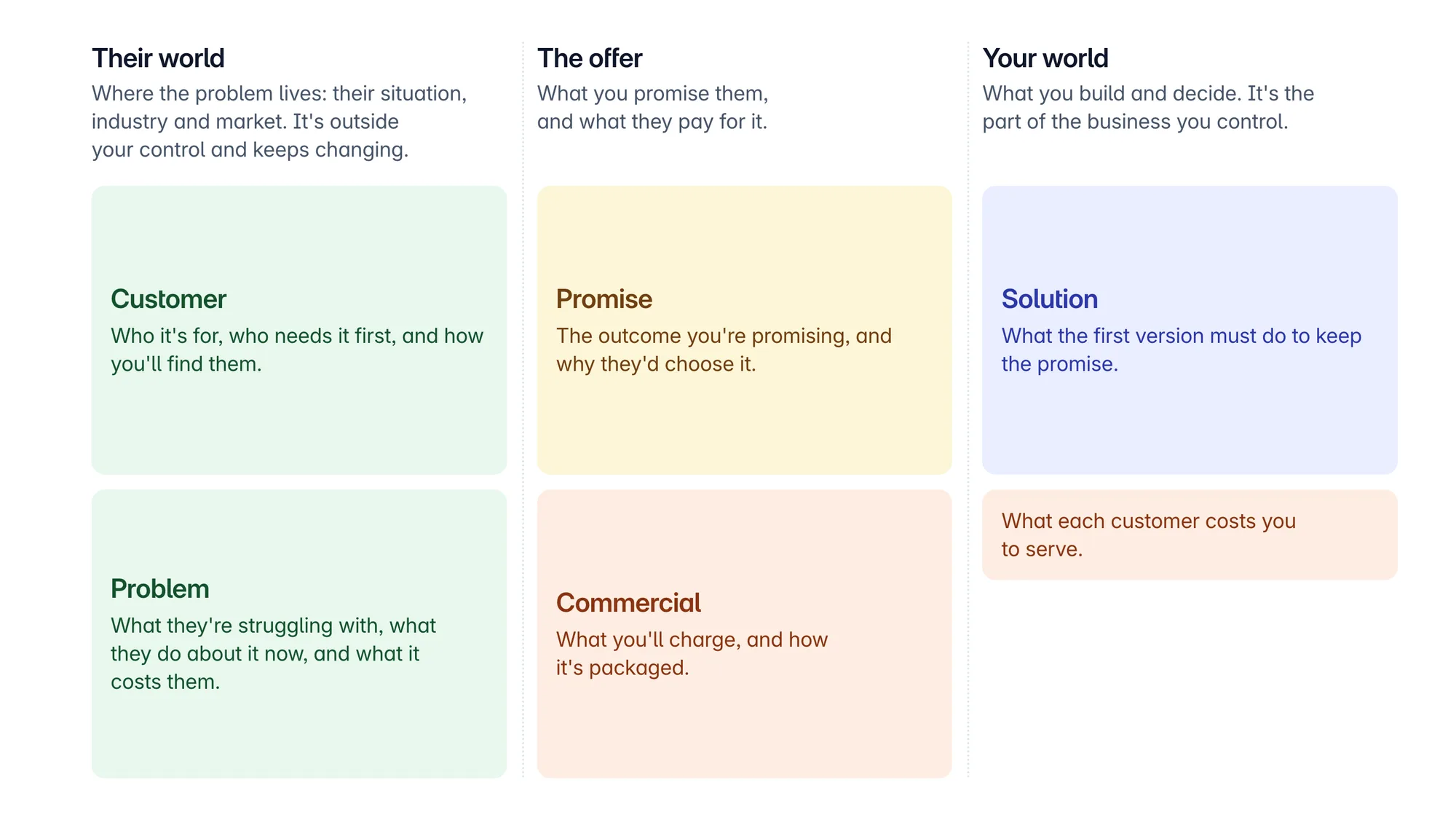
The answers shape each other. Change one, and others will usually change with it.
Then test it, at AI speed
Testing means getting out of your world and into theirs: taking your answers to the people you'd sell to and seeing how they respond. That could be a conversation, a sales call, a survey, a landing page or a prototype. What they do shows you more than what they say they'd do.
Start with the answers that would hurt most if they were wrong. A test can be as simple as asking someone how they deal with the problem today. Or it can be a landing page with a price on it, which shows whether the right people turn up, whether your promise lands and whether anyone will pay.
AI makes this far faster than the old Lean Startup playbook. It can research a market in an afternoon, find the people worth talking to, and build a working prototype for them to react to.
It also flips the order. Lean Startup taught founders to test before investing in a real build, because building was expensive. Now building can be the first test. What separates this from the Product Illusion is intent. Build to test your hypothesis, put a price on it, and show it to them. Then update your answers and go again.
Payment tests most of your answers at once. Someone who pays is telling you that you've found the right customer, a real problem, a promise worth choosing and a price they'll accept. So don't leave the commercial answer until last, as most of us do. Ask your first customers to pay much sooner than feels comfortable.
Doing this well on your own is hard. That's why we built Sal, and the waitlist is open now.
Meet Sal
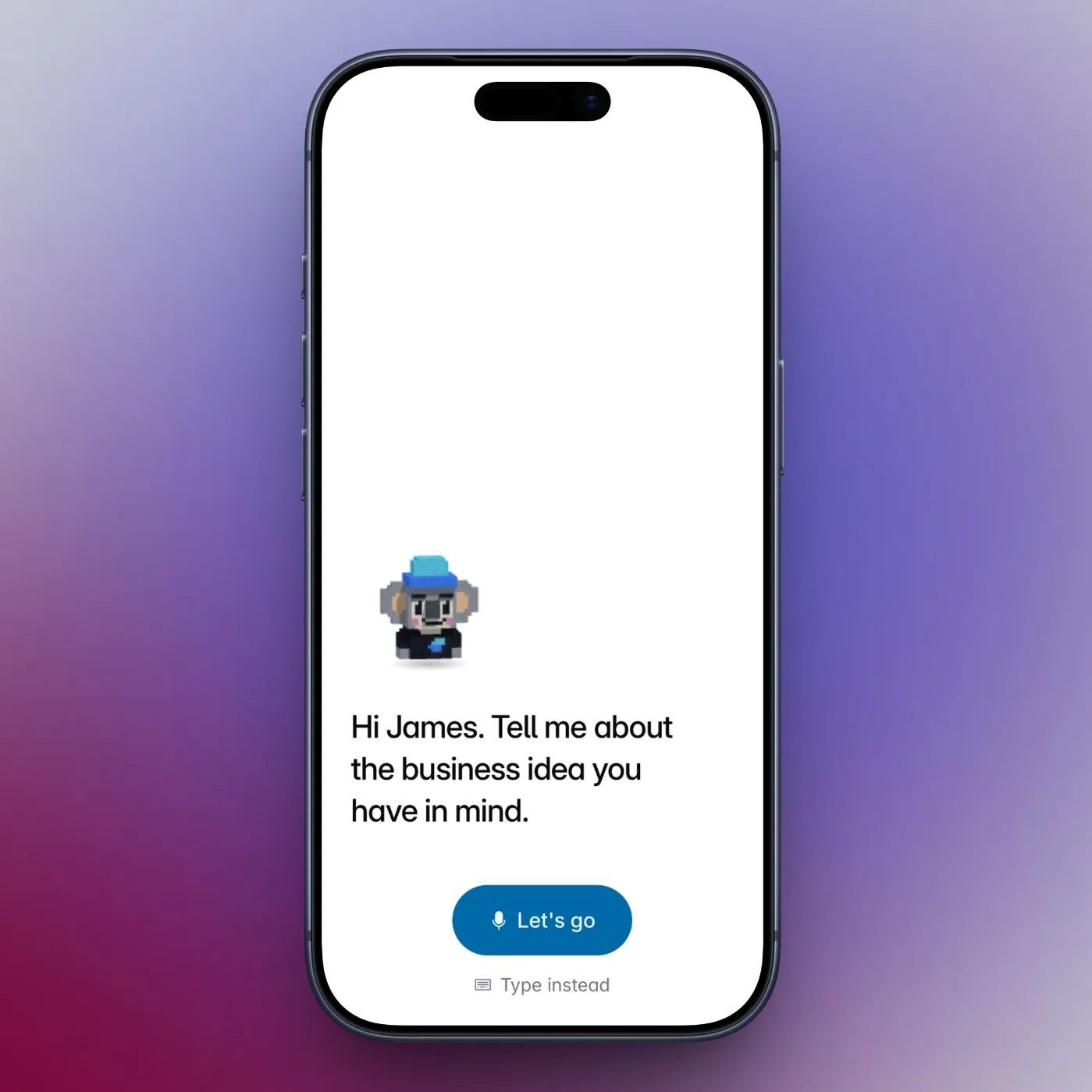
Sal is an AI business coach you talk to, built by the team at Salable. Tell him your idea, out loud or typed, and he helps you work it through, one question at a time.
Here's what Sal does:
- The right questions, in the right order. Sal works through your Business Hypothesis with you, starting in your customer's world: who it's for and the problem, before what you build. He asks follow-up questions when an answer is thin.
- A plan you can test. As you talk, Sal writes up your business plan, pricing, roadmap and a first draft of your landing page, with the guesses marked, so you know what to test with customers next. Come back with what you learn and Sal updates the plan with you.
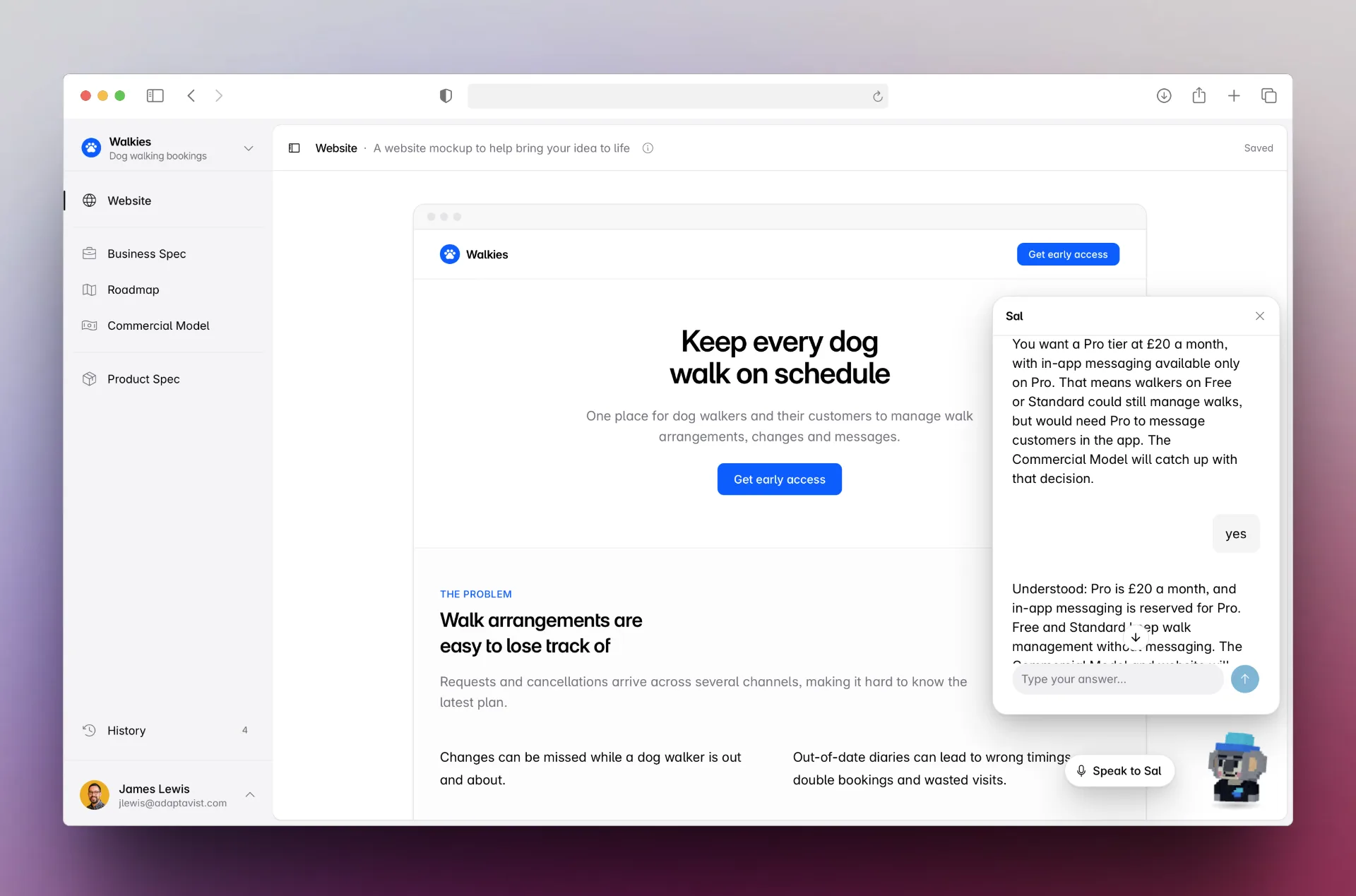
- Something real to put in front of customers. Sal turns your plan into a clickable prototype you can share, with key journeys and a landing page with pricing, so customers react to something real and you can ask for money early. Once it has proved itself, Sal writes the brief for Lovable, Claude Code or a developer to build the real thing.
- Ready to charge from day one. If you choose, Sal automatically keeps the pricing you've worked out in sync with Salable, our platform for monetising software, with payments through a Stripe account created for you that you fully own, and an API your app uses to check what each customer can use. There's nothing technical to set up. It's completely optional though, and free until you're making $500 a month.